Saju vs Bazi vs Chinese Zodiac: The Complete Difference (2026 Guide)
Saju vs Bazi vs Chinese Zodiac — what's actually different? A clear, beginner-friendly guide to the three East Asian systems, how they overlap, and which one reads your real birth chart.
If you've ever read that you're a "Wood Rabbit" or that this is your "year of bad luck," you've already brushed against East Asian astrology — but probably without knowing which system you were looking at. Saju, Bazi, and the Chinese Zodiac get used almost interchangeably online, and that's where the confusion starts. They're related, but they are not the same thing, and the difference completely changes how personal — and how accurate-feeling — a reading is.
This guide breaks down all three in plain English: what each one actually reads, where they overlap, and why two of them are far more specific than the one most Westerners know.
(A quick, honest note before we start: this is written for entertainment and self-reflection — a lens for thinking about yourself, not medical, legal, or financial advice. Keep that frame and the rest is just fun.)
The one-sentence version
- Chinese Zodiac = your birth year → one of 12 animals. The broad, pop-culture layer.
- Bazi (八字, "Eight Characters") = your full birth chart from four pillars (year, month, day, hour). The detailed system.
- Saju (사주, 四柱, "Four Pillars") = the Korean name for the same Four Pillars system as Bazi, with its own reading tradition.
So the real comparison isn't three rival systems — it's one broad layer (the zodiac) vs. one deep system that goes by two names (Saju in Korea, Bazi in China). Let's unpack that.
What the Chinese Zodiac actually reads
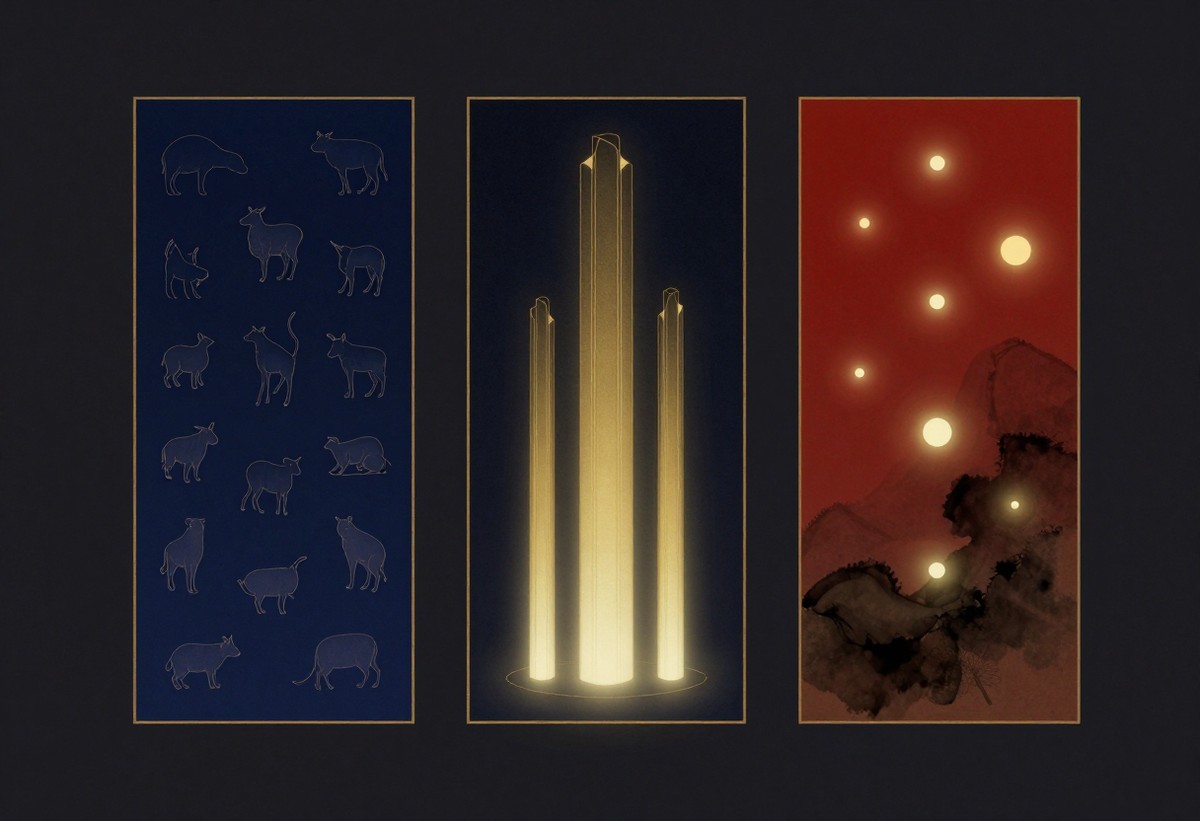
The Chinese Zodiac (生肖, shēngxiào) assigns you an animal based on the year you were born — Rat, Ox, Tiger, Rabbit, Dragon, Snake, Horse, Goat, Monkey, Rooster, Dog, Pig. It runs on a 12-year cycle, and a longer 60-year cycle pairs each animal with one of the Five Elements (Wood, Fire, Earth, Metal, Water) — which is where "Wood Rabbit" or "Fire Horse" comes from.
It's genuinely useful as a broad personality and compatibility sketch, and it's the layer that's fun at a dinner table. But notice the limitation: everyone born in the same year shares the same animal. That's roughly one twelfth of the planet getting the identical headline. It's a starting point, not a fingerprint.
What Bazi and Saju actually read
Here's where it gets specific. Bazi — literally "eight characters" — and Saju — literally "four pillars" — are the same underlying system with different cultural names and reading styles. Instead of just your birth year, this system maps four moments of your birth:
- Year pillar — your roots, family, the broad backdrop.
- Month pillar — your environment, drive, how you move through the world.
- Day pillar — you. The single most important pillar.
- Hour pillar — your inner world, later life, the private layer.
Each pillar has two parts: a Heavenly Stem (天干) and an Earthly Branch (地支). Four pillars × two = eight characters — that's literally what "Bazi" means. The Earthly Branches are where the zodiac animals reappear, but now they're just one component out of eight, not the whole story.
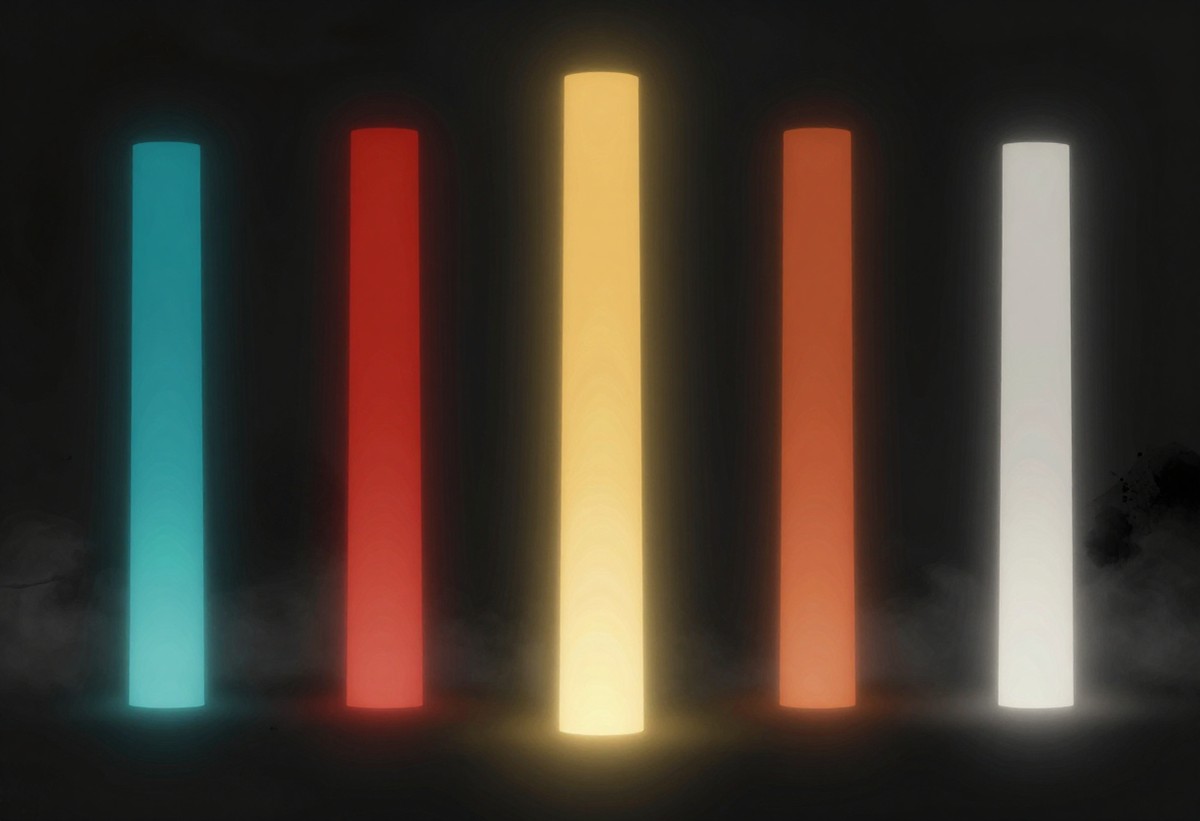
The heart of a Saju/Bazi reading is your Day Master — the Heavenly Stem of your day pillar. It represents you as one of the Five Elements, and the whole chart is read as: how much support, balance, or tension surrounds that core element. A chart heavy in Water with a Fire Day Master reads very differently from a Fire-rich one — even for two people born the same year.
The key difference: birth time is load-bearing
This is the single most important distinction, so it's worth saying clearly. The Chinese Zodiac doesn't need your birth time. Saju and Bazi do.
Two people born on the same date get the same zodiac animal — but if they were born in different two-hour windows, they get different Four Pillars charts, because the hour pillar changes. The system treats your birth time as essential, not optional. That's why a Saju/Bazi reading feels personal in a way a year-based animal sign can't: it's reading a specific moment, down to the hour.
So which "rivalry" is real?
| Chinese Zodiac | Saju / Bazi | |
|---|---|---|
| Reads | Birth year | Year + month + day + hour |
| Output | 1 of 12 animals (+ element) | A full 8-character chart |
| Needs birth time? | No | Yes |
| Best for | Broad personality, fun compatibility | Detailed self-analysis, timing, balance |
| Names | Chinese Zodiac / Shengxiao | Saju (Korea), Bazi (China) — same system |
A fair way to hold it: the Chinese Zodiac is the cover of the book; Saju/Bazi is the book. And "Saju vs Bazi" isn't really a contest at all — it's the same Four Pillars framework refined in two cultures, with Korean Saju reading carrying its own emphasis and interpretive style.
How this compares to Western astrology
If you already know your sun, moon, and rising signs, the Four Pillars will feel familiar in spirit but different in mechanics. Western astrology maps planetary positions; Saju/Bazi maps the Five Elements across four time-pillars. Both try to describe character and timing — they just use different machinery. Many people find that having both lenses is more interesting than picking a side.
Want to see your own Four Pillars?
Reading the theory is one thing; seeing your own chart is where it clicks. The friction has always been language — the deep Saju tradition lived mostly in Korean, and the English material was either dense academic PDFs or sites stuck in 2009.
k-saju.me takes your birth date, time, and place, builds your Four Pillars (Saju) chart, and explains it in plain English — your Day Master, your balance across the Five Elements, and how the energies around you are arranged.
You can try it free, no credit card needed, so you can see if it resonates before deciding anything. If you want to go deeper, there's a single in-depth Four Pillars report for $4.99, or a $7.99/month plan with a 7-day free trial — a daily Saju card, a deeper premium reading, and tracking of how your energies shift. Cancel anytime.
No fake countdowns, no fear-selling — just your chart, read honestly, for reflection.
→ Reveal your Four Pillars — free, no card needed
Saju and Bazi are offered here for entertainment and self-reflection — a framework for thinking about yourself, not a substitute for professional medical, legal, or financial advice.